
Cryo-SEM Imaging of Lavender: Preserving Native Biological Structures
Publication date
Tuesday, 12 May 2026
Body
Biological samples are generally soft, hydrated materials composed of delicate cellular structures that are highly susceptible to dehydration and beam damage under conventional scanning electron microscope (SEM) conditions. Cryo-SEM avoids introducing artefacts through chemical sample fixation and dehydration by critical point drying and instead uses rapid freezing of the material which allows imaging/analysis of these samples as close to their live state as possible.
High-resolution imaging involves cryogenic preparation using the Quorum PP3010 Cryo Preparation System on the Hitachi SU7000, followed by secondary electron (SE) imaging at low beam energies to reduce beam damage.
Image
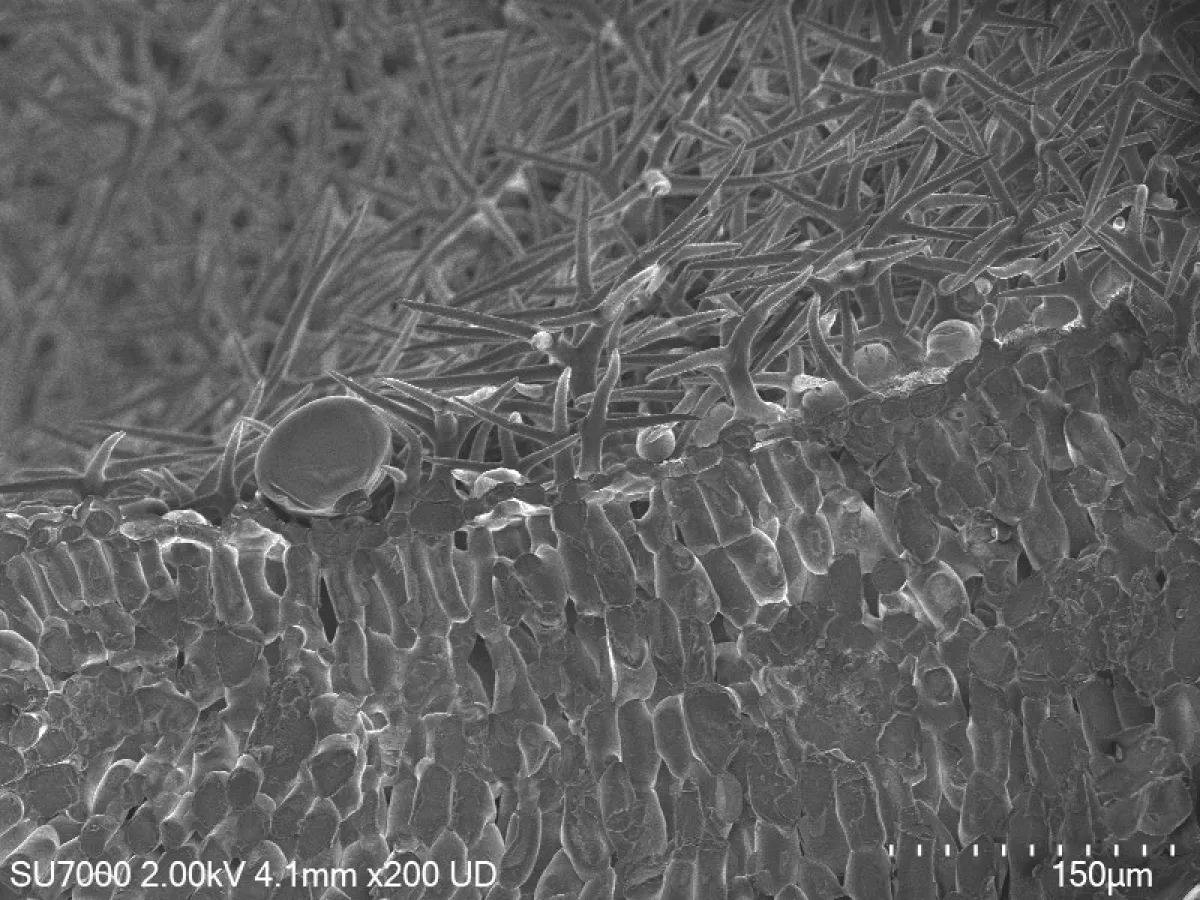
Cryo-SEM secondary electron image of a fractured lavender leaf showing abundant surface trichomes (modified epidermal cells) and a cross-sectional plane of the underlying cellular leaf structure. The image was acquired under cryogenic conditions to preserve the ultrastructure of the sample as close to the native hydrated state as possible.